
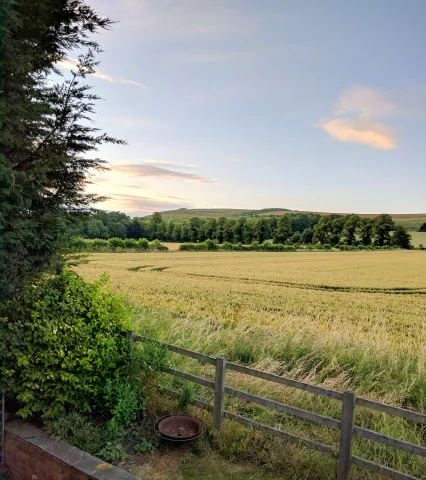
Sitting on the edge of a wheat field in Wiltshire, overlooking the crop and an iron-age hill-fort, I thought about the point in time when humans switched from being hunter gatherers to being farmers - and how that shift would affect our thinking.
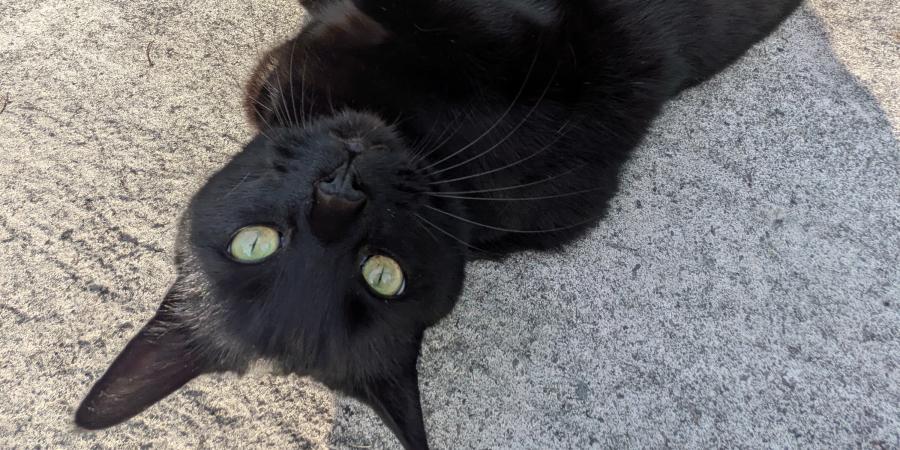
Animals live in the moment. My cat does not worry about tomorrow, or next week or next year. He sits, he washes himself. At some point he is hungry and miaows for food. When he has had enough he washes his face. As a human, my mind is all over the place! I worry about where the cat is if I can't see him. Is he hungry? Am I feeding him too much? Will the vet be cross on our next visit because the cat is overweight? Will he get ill and suffer? How will I cope when he dies, I know I will be devastated! Which leads me to ask the question, at what point in our evolution did we go from the animal way of thinking to the human way?
Recently watching David Attenborough’s brilliant Life on Earth showed him chilling out with Gorillas, which makes me think that Gorillas think more like cats than humans, so our closest relatives are not affected. Ancient religous texts, such as Buddhist and Taoist writings, contain advice on how to calm the mind going back a few thousand years. So, the change came about some time between early man and our earliest religious texts.
If the main source of mind chatter relates to the past and the future as Ekhart Tolle says in his book The Power of Now, then could the switch from a hunter gatherer life to a settled farming existence be the point where we changed?
Looking out at the wheat field, which is right next to my house, I was quite concerned about it catching fire in the heatwave we were experiencing. I was mainly worried for my house, but an iron-age farmer would have relied on that field of gold to feed him until the spring. It's loss would be catastrophic. Plenty to worry about!
Sowing a crop is an act of faith, seeds sown in spring need the right weather conditions to germinate, grow and ripen. The crop is vulnerable to disease, pests, fire and flood. Once harvested, the grain needs to be stored for months and can rot, be eaten by mice (hence my hungry cat companion) be stolen by other groups, sprout in damp storage and I've no doubt there are many other perils that I don't even know about! This must have been a new and unexpected outcome for the early farmers, this new way of life was maybe changing human culture in ways they could not have predicted.
Hunter-gatherer life was a lot more simple. Wake up in the morning, gather some food, attempt to kill a prey animal, eat the food, do a dance ritual to show how close you were to actually getting the prey, go to sleep. Next day - the same, occasionally move to another part of the forest where the prey animals have forgotten about you and are less cunning.
But now, with this new farming thing, yes, you have more wealth (food) than you could ever have dreamed of, but it brings worry. Fears of what might happen in the future.
But not only that, it also brings worries about the past. Did I prepare the field well enough? Did we select the best seed from last years crop? Did we sow the seed at the right time of year - is that big stone henge we made working correctly or is that just techno mumbo-jumbo made up by the druids? I can imagine looking out across a field of sparse, straggly wheat and feeling full of regret and self-hatred for having made mistakes that have led to a less then fruitful crop.
Agriculture goes back around 10,000 years, a very short time in evolutionary terms, modern humans have existed for at least ten times that long. Our biology has not changed radically in the last 20,000 years, but has the switch to a settled agricultural society changed our way of thinking? With all the technological and cultural changes that have taken place since then, are we still stuck with a farmer's mind-set when we should be as happy as cats?





Add new comment